2026.04.24 15:00 星期五报告会 Prof. Robert van der Hilst Earth, Atmospheric and Planetary Science, MIT
2026-04-22

New Views on Earth's Interior:
Two Decades of Research Collaboration with China
2026.04.24(星期五)15:00,理科二号楼2821
报告人简介:
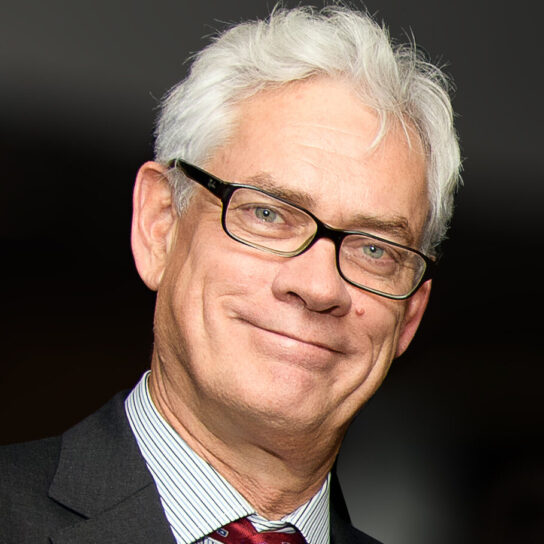
Rob van der Hilst received his PhD in Geophysics from Utrecht University VET in 1990. After postdoctoral research at the University of Leeds (1990-1992) and the Australian National University (1992-1995), he joined the faculty of the Department of Earth, Atmospheric and Planetary Sciences (EAPS) at MIT in 1996. Van der Hilst’s tenure has included numerous departmental leadership roles, including as chair of the Program in Geophysics (2003-2008) and as director of the Earth Resources Laboratory (ERL, 2004-2012). In 2012, he was appointed EAPS Department Head, serving in that role for 13 years before stepping down in 2025. In addition to his work at MIT, Van der Hilst has been a Visiting Professor at the Institut de Physique du Globe de Paris since 1998.
Van der Hilst was named a fellow of the American Geophysical Union (AGU) in 1997 and became a fellow of the American Academy of Arts and Sciences in 2014. Before he was named the Schlumberger Professor in 2011, Van der Hilst held a Cecil and Ida Green Professorship and a Kerr-McGee Career Development Professorship. His work has garnered significant recognition, including the Doornbos Memorial Prize from the International Association of Seismology and Physics of the Earth’s Interior, AGU’s James B. Macelwane Medal, a Packard Fellowship, and a VICI Innovative Research Award from the Dutch National Science Foundation.
He engages in cross-disciplinary and collaborative research focused on understanding geological processes in Earth’s deep interior, both on a regional scale – for instance, the continental structure and evolution of Tibet, East Asia, and North America, the subduction of oceanic plates beneath western Pacific island arcs, the upper mantle transition zone beneath Hawaii, and the complex region just above the core mantle boundary beneath Asia and Central America – and on the global scale, unraveling the pattern and nature of mantle convection. The main tools he uses and develops are global reflection seismology and seismic tomography, integrated with constraints from geology, geomagnetic plate reconstructions, mineral physics, and geodynamics.