2026-03-10



Interplay of Seismic and Aseismic Slip
Through Earthquake Cycles
Prof. Roland Bürgmann
Earth and Planetary Science,
University of California, Berkeley
2026.03.27(星期五)15:10,理科教学楼 402
摘要:
Modern geodetic and seismologic observations describe the aseismic and seismic accommodation of fault slip over a vast range of spatial and temporal scales. Aseismic slip at sub-seismogenic speeds is evident from top to bottom of lithospheric faults and plays an important role through the interseismic, preseismic and postseismic phases of the earthquake cycle. Aseismic slip during the interseismic period between large earthquake ruptures occur on poorly coupled sections of a fault, both as steady fault creep and episodic slow slip events. The conditions and mechanics of slow-slip behavior continue to be much debated (e.g., Bürgmann, 2018, doi: 10.1016/j.epsl.2018.04.062).
Here, I will focus on evidence of decadal changes in the distribution of coupling and the rate of slow slip on partially coupled plate-boundary faults, with a focus on the Alaska subduction zone and the Hayward fault in California. Model analysis of interseismic deformation indicate that late in the earthquake cycle, fully locked portions of partially coupled faults shrink to span only a fraction of the extent of past historical rupture zones. Similar to observations in Northeast Japan prior to the 2011 Tohoku-oki earthquake, we find evidence for an overall increase of fault creep rates on the Hayward fault in recent decades, which appear to be consistent with such an asperity-shrinking model. This suggests that following coseismic rupture and postseismic afterslip, locked asperities slowly shrink and aseismic slip rates slowly rise, through the remainder of the earthquake cycle. Dynamic models of partially coupled faults through earthquake cycles also suggest non-stationary asperities that decrease in size late in the earthquake cycle, suggesting that this long-term process may be characteristic of partially coupled faults.
报告人简介:
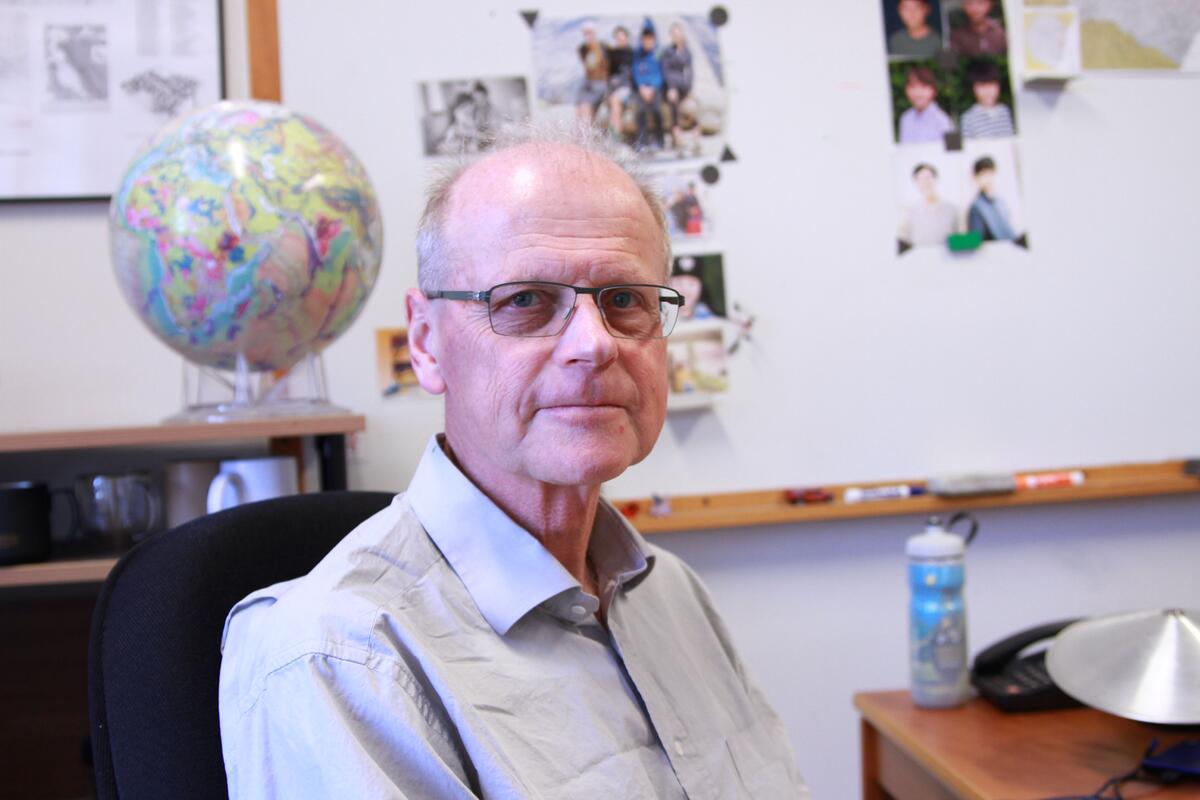
Roland Bürgmann is a Professor of Earth and Planetary Science at the University of California, Berkeley, where he has taught and conducted research since 1998. He is a leading authority on how the Earth’s surface moves and changes, specifically focusing on active tectonics, earthquakes, and the physical properties of the Earth’s crust. He earned a Ph.D. in Geological Sciences from Stanford University (1993) and a Master’s degree from the University of Colorado, Boulder (1989). His work uses high-tech satellite tools, such as GPS and radar imaging (InSAR), to measure tiny shifts in the ground near active faults, volcanoes, and landslides. He builds mathematical models to explain the earthquake cycle and how water, climate, and other environmental factors can trigger seismic activity. He has been recognized as a Fellow of both the American Geophysical Union (AGU) and the American Association for the Advancement of Science (AAAS), and has delivered several prestigious talks, including the Bowie Lecture (2024) and the Birch Lecture (2013) for the AGU. For nearly a decade, he served as Chair of the USGS National Earthquake Prediction Evaluation Council, advising on the science of earthquake forecasting. Professor Bürgmann has published over 250 scientific papers in top-tier journals like Science and Nature. He is a dedicated educator who has mentored 20 graduate students and nearly 30 postdoctoral researchers, many of whom are now leaders at institutions like NASA and the USGS. He is currently a Miller Research Professor at UC Berkeley for the 2025–2026 academic year.